Pizza Box Design: Keep Pizza Hot, Crisp and Memorable in the UK

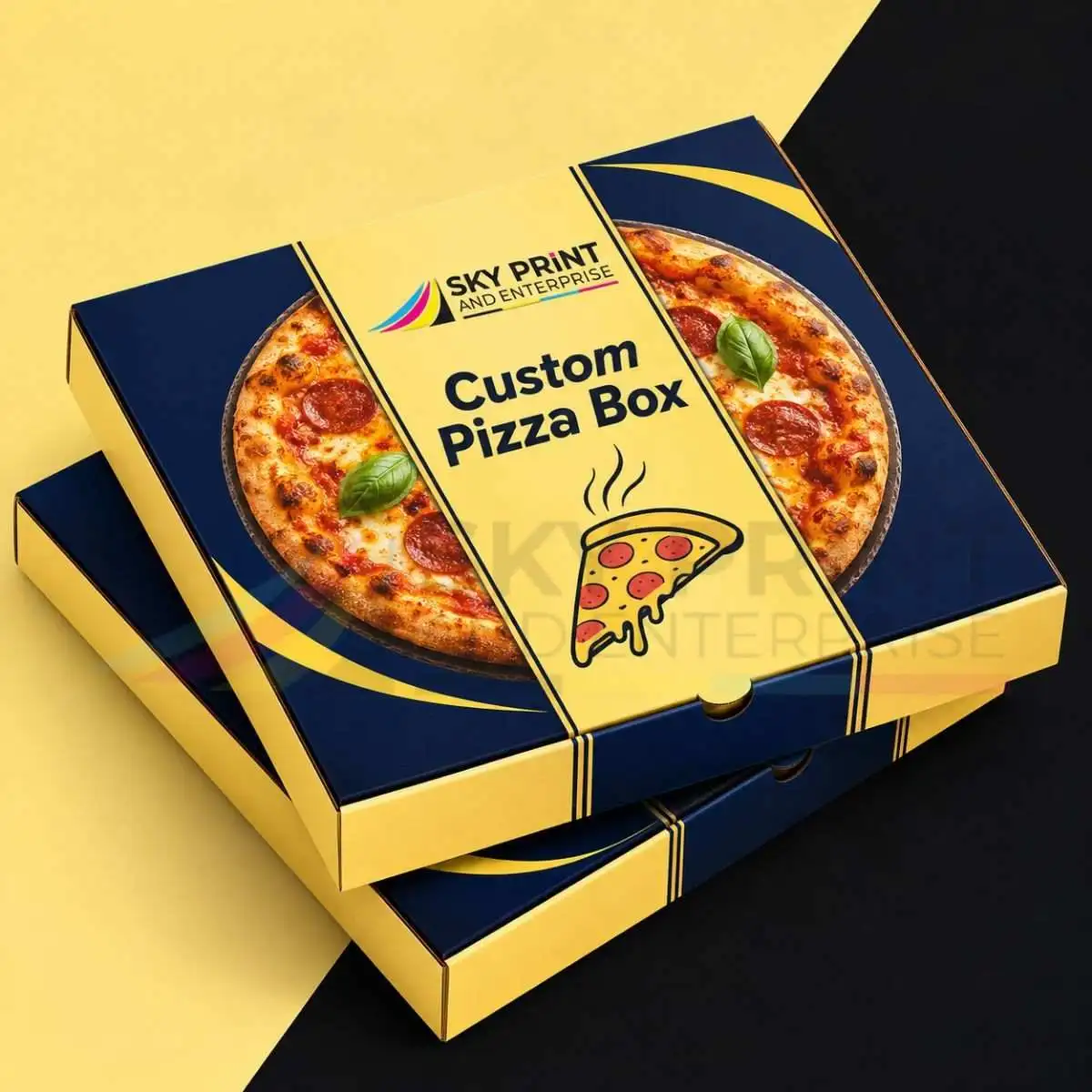
Choosing the right pizza box design decides whether your pizza arrives hot, crisp and memorable. At Sky Print and Enterprise, we help UK pizzerias, takeaways and food startups turn plain cardboard into a powerful branding tool. Moreover, our custom food packaging boxes range gives you reliable options for every menu item. In this guide, you will learn how structure, material, print and branding work together. As a result, you will know how to build packaging that protects your food, supports your marketing and wins repeat orders.
Ready to upgrade your packaging? Start your pizza box order and see how your brand can stand out on every order.
Why Pizza Box Design Matters for UK Pizzerias
Your box is often the first thing a customer touches. Therefore, it shapes their opinion before they taste a single bite. A flimsy, plain or greasy box suggests a careless kitchen. In contrast, a sturdy, well-printed box tells customers that you care about quality. Our team at Sky Print and Enterprise sees this pattern with every new client we support.
Furthermore, UK customers order pizza through delivery apps, phone calls and walk-in counters. Consequently, your box travels through homes, offices, student flats and social media feeds. Customers photograph attractive boxes and share them online. For example, a bold logo and a clear message on the lid can turn one order into dozens of free impressions. If you want a deeper look at brand-led options, read our guide to personalised pizza boxes for UK businesses.
In addition, good pizza package design solves practical problems. It keeps heat inside, lets steam escape and stops the base from turning soggy. Meanwhile, it also stacks safely in delivery bags and survives wet British weather. Many owners focus only on looks, yet function matters just as much. Our packaging design guide explains how layout, structure and branding support each other.
Moreover, competition in the UK takeaway market is intense. Almost every high street has several pizzerias, and national chains spend millions on advertising. Therefore, independent brands need every advantage they can find. A distinctive box costs only a few pence more than a plain one, yet it can lift recognition and loyalty. In other words, packaging offers one of the best returns on any marketing budget.
Finally, remember that your box works as a silent salesperson. It sits on a kitchen table for twenty minutes or more. During that time, every inch of the surface offers a chance to share your story, your website and your offers. Smart owners treat the box as a marketing channel, not just a container. As a result, they build a recognisable brand without paying for extra advertising space.
Key Elements of Great Pizza Packaging Design
Great pizza packaging design starts with a clear goal. First, decide what you want the box to say about your brand. Next, choose a style that matches your menu. A traditional wood-fired pizzeria suits earthy tones and hand-drawn artwork. By contrast, a modern street-food brand may prefer bright colours and playful type. In both cases, consistency builds recognition.
Moreover, you should plan your artwork around the box structure. The lid is your main canvas, so place your logo there. However, do not ignore the sides and inside flaps. Many brands print a thank-you note, a loyalty offer or a QR code inside the lid. Customers open the box slowly, and therefore they read these details. If you want to keep costs sensible while adding such features, review our affordable pizza box tips.
In addition, keep your typography simple and legible. Choose one or two fonts and avoid crowded text. Similarly, limit your colour palette so that your artwork prints cleanly and reads well from a distance. High-contrast colours work best on kraft and white stock alike. Furthermore, make sure your logo has enough space around it. Crowded logos look weak, while a confident amount of white space looks premium.
Besides layout, think about storytelling. Customers love a short, honest story about where your recipes come from or why you started the business. A two-line message on the inside flap can create a personal connection. Consequently, people remember your pizzeria and talk about it with friends. This kind of word-of-mouth marketing is powerful for local businesses.
Lastly, prepare artwork at the right resolution. Blurry logos spoil an otherwise strong layout. Our printing team checks every file before production, and we also explain bleed, margins and colour modes in the printing and packaging guide. As a result, you avoid costly reprints and delays.
- Place your logo and brand colours on the lid.
- Add a short message or offer inside the box.
- Use clear icons for recycling and food safety.
- Keep contact details and your website visible.
- Include social media handles to encourage sharing.
Choosing the Right Material for Your Pizza Box
Material choice affects heat retention, strength and cost. Therefore, you should match the board to your delivery style. Corrugated board is the industry standard for pizza boxes. Its fluted layer traps warmth and adds rigidity, so the box resists crushing in a delivery bag. If you want to understand the technical side, explore our corrugated cardboard material service page.
Moreover, kraft board gives your pizza box design a natural, eco-friendly look. Many UK customers now prefer packaging that looks sustainable and feels honest. Consequently, brown kraft stock has become popular with independent pizzerias. It also prints beautifully in one or two colours, which helps you control costs. You can learn more about this option on our kraft packaging material page.
In addition, consider flute size. E-flute and B-flute boards offer different levels of strength and insulation. A thinner flute gives a neat, premium finish and prints sharply. A thicker flute adds extra protection for large or heavily loaded pizzas. Therefore, think about your toppings, your delivery distance and how many boxes drivers stack at once before you choose.
Furthermore, consider grease resistance. Hot, oily pizza can soak through plain board and leave stains on the lid. For this reason, many brands choose food-safe coatings or liners. Our team advises on suitable finishes based on your toppings and budget. We also recommend testing a sample before placing a large order. A short test with a real hot pizza shows you exactly how the board performs.
Finally, think about environmental responsibility. Most corrugated and kraft boxes are recyclable, but food residue can limit recycling. Therefore, you should add clear disposal advice to your print. Honest guidance builds trust, and trust keeps customers coming back. In addition, many UK councils accept clean cardboard, so you can encourage customers to recycle the lid even when the base is greasy.
Sizes, Structure and Style Options
Size accuracy matters more than many owners expect. A box that is too large lets the pizza slide, while a box that is too small crushes the toppings. Therefore, measure your pizza diameter and add a small margin. UK pizzerias commonly serve a range of sizes, from personal ten-inch pizzas to family-sized sixteen-inch options. As a result, you may need several box formats. Moreover, a consistent structure across sizes keeps your brand look uniform.
Next, choose a structure that suits your workflow. Folding boxes with locking tabs assemble quickly during a busy Friday night. In addition, they ship flat, which saves storage space in a small kitchen. Meanwhile, some brands prefer a deeper box for stuffed crust, calzones or sharing platters. Our range of cardboard packaging options covers many of these formats.
Style also plays a role. For example, a matte finish gives a premium, modern look. On the other hand, a gloss finish makes colours pop and wipes clean easily. Soft-touch coatings add a luxurious feel, although they cost more. Window cut-outs are rare on pizza boxes because of grease, so most brands rely on strong printed graphics instead. Similarly, tear-off sections or built-in plate bases add convenience for customers.
Besides these details, think about ventilation. Small vent holes let steam escape and keep the crust crisp. However, too many holes weaken the structure and let heat out quickly. Therefore, test different designs with your own recipes. A thin-crust Neapolitan pizza behaves differently from a deep-pan American style, so each menu may need its own approach.
Finally, think about stacking and storage. Stable boxes protect pizzas during multi-order deliveries. As a result, drivers handle fewer complaints and refunds. If you want a broader view of board types and finishes, browse our full list of packaging materials UK businesses trust. Every choice you make should support both the food and the brand.
Pizza Box Printable Templates and Print Methods
Many new owners search for a pizza box printable template to start their artwork. A template shows fold lines, glue areas and safe zones. Therefore, it prevents mistakes such as text running over a crease. However, a generic template only helps with layout. For a professional result, you still need a printer who understands food packaging, board grades and colour control.
Moreover, you can choose between digital and offset printing. Digital printing suits small runs, test batches and seasonal designs. Offset printing suits larger volumes and delivers excellent colour consistency. In addition, flexographic printing works well on kraft board with simple artwork. Our team explains each method and recommends the best one for your quantity and budget.
When you prepare a packaging pizza box design file, follow a few simple rules. First, build the artwork on the correct template. Second, convert text to outlines and embed images. Third, use CMYK colours for accurate results. Fourth, add at least three millimetres of bleed. Finally, send a PDF proof for approval. These steps keep production smooth and predictable.
Furthermore, remember that screen colours differ from printed colours. A bright orange on your monitor may look duller on kraft board. Therefore, ask for a physical proof when colour accuracy matters. Printers can also match brand colours using spot inks, which helps when your logo needs exact shades. In addition, uncoated stock absorbs ink differently from coated stock, so adjust your expectations accordingly.
Besides pizza, many food brands need matching packaging for sides and snacks. For instance, you can pair your pizza boxes with our food boxes range to create a complete branded set. Furthermore, local customers can rely on our printing services in Sheffield for fast, dependable support.
What Pizza Hut Packaging Design Teaches Small Brands
Large chains offer useful lessons, even if your budget is smaller. Pizza Hut packaging design, for example, shows how consistent branding builds instant recognition. The colours, logo placement and tone stay familiar across every order. As a result, customers know the brand before they open the lid. Small pizzerias can apply this principle without copying any logo or artwork.
Moreover, big brands treat packaging as part of the product experience. They add offers, app prompts and social media handles to the box. Similarly, you can print a simple call to action that invites customers to order direct or follow your page. This approach also reduces your reliance on third-party delivery platforms, which often take a large commission.
However, you do not need a national budget to achieve a premium feel. Independent brands often win by being more personal. A friendly message, a local story or a hand-drawn illustration can feel more genuine than corporate graphics. Therefore, focus on what makes your pizzeria unique and let your packaging reflect it. For example, a pizzeria in Yorkshire might celebrate local ingredients, while a seaside takeaway might use coastal imagery.
In addition, large chains test their packaging constantly. They track complaints, measure delivery times and adjust designs based on data. You can do the same on a smaller scale. Ask customers for feedback, review refund requests and note which boxes arrive damaged. Consequently, you learn what works and fix problems early. This habit separates growing brands from stagnant ones.
Finally, think about your wider menu. Many pizzerias also sell burgers, wings and wraps, so matching packaging keeps the brand consistent. You can explore our burger box range for this purpose. Likewise, businesses in West Yorkshire can use our packaging services in Leeds for convenient local production.
Building Trust Through Quality and Sustainability
Trust grows when your packaging matches your promises. Therefore, choose materials that are food safe and honestly labelled. At Sky Print and Enterprise, we focus on dependable board, accurate printing and clear communication. Our experience with UK food businesses shows that reliability matters as much as appearance. A beautiful box that fails in the rain damages your reputation quickly.
Moreover, sustainability now influences buying decisions. Customers notice recyclable materials and responsible messaging. Consequently, you should print recycling symbols and avoid unnecessary plastic. In addition, you can choose water-based inks where suitable. These small choices strengthen your brand and show that you respect the environment. Furthermore, UK businesses face growing expectations around packaging waste, so planning ahead protects you from future changes.
Besides material choices, think about transparency. Tell customers what your box is made from and how to dispose of it. A short line such as "Please recycle the clean lid" costs nothing and builds goodwill. Similarly, share your commitment to quality on your website and social channels. Customers trust brands that explain their decisions openly.
Furthermore, consistency across your product line adds credibility. A customer who orders pizza and chicken in the same evening expects both to look professional. For example, our printed chicken boxes pair neatly with pizza packaging. This kind of matching set makes your brand look established, even when you are a small team.
Finally, always request a physical sample before a big order. Check the fit, the print quality and the strength. Then ask your team to test it during a real service. This practical approach protects your investment and ensures that your packaging performs under pressure. Moreover, it gives your staff confidence, because they know the boxes will assemble quickly and hold up during delivery.
Controlling Costs Without Losing Quality
Cost matters to every food business, especially when ingredient and energy prices rise. However, cutting corners on packaging often costs more in the long run. Soggy pizzas, crushed boxes and unhappy customers lead to refunds and lost orders. Therefore, aim for smart savings rather than the lowest possible price.
First, order in sensible quantities. Larger runs reduce the price per box, but only if you can use the stock before it ages or your design changes. In addition, standardise your sizes where possible. Fewer formats mean simpler ordering, easier storage and better volume discounts. Moreover, a single core design with seasonal stickers or inserts avoids the expense of reprinting the entire box.
Next, simplify your print. One or two colours on kraft board can look striking and cost far less than full-colour printing. For example, a bold black logo on natural brown board feels confident and modern. Similarly, printing only the lid keeps costs down while still delivering strong branding. As a result, many small pizzerias achieve a premium look on a modest budget.
Furthermore, plan your orders around your calendar. Busy periods such as Christmas, football finals and bank holiday weekends increase demand sharply. Therefore, order early so that production and delivery never delay your service. Late orders often require rush fees, which erode your margin. In addition, a good supplier helps you forecast quantities based on your past sales.
Finally, compare total value, not just unit price. Consider strength, print quality, lead times and customer service. A reliable partner who answers questions quickly and delivers on time saves you stress and money. For takeaway sides such as sausages and snacks, our hot dog trays offer a practical, budget-friendly addition to your order.
Common Pizza Box Design Mistakes to Avoid
Even experienced owners make avoidable mistakes. First, many brands overload the lid with text and graphics. As a result, the message becomes confusing. Instead, highlight one clear idea, such as your logo and a short slogan. Simple layouts look more confident and print more reliably.
Second, some owners ignore the delivery environment. A box that looks great on a studio table may bend in a moped bag. Therefore, test your design in real conditions. Check how it handles heat, steam and stacking. Moreover, ask drivers for feedback, because they notice problems quickly.
Third, many brands forget about future flexibility. Seasonal offers and menu changes happen often. Consequently, design a core box that stays constant and add stickers or inserts for promotions. This method keeps costs low and avoids wasting stock. Similarly, order a sensible quantity so you do not store excess boxes for months.
Fourth, some businesses skip proofing. A typo on the lid, a wrong phone number or a faded colour can ruin thousands of boxes. Therefore, check every proof carefully and ask a colleague to review it too. In addition, confirm that your website address, social handles and hygiene rating details are accurate before approval.
Lastly, some businesses choose the cheapest option without considering performance. A low price means little if customers receive a soggy pizza. Instead, balance cost and quality. If your menu also includes lunch items, our sandwich box options help you keep every product consistent. Ultimately, smart planning keeps both your customers and your accounts happy.
Final Thoughts
A strong pizza box design blends structure, material, print and brand personality. Moreover, it protects your food, supports your marketing and builds customer trust. By choosing the right board, planning your artwork carefully and testing samples, you create packaging that works hard for your business. In addition, learning from big brands and adapting their lessons to your own style gives you a clear advantage. Sky Print and Enterprise supports UK pizzerias at every step, from first concept to final delivery. Therefore, start planning your next order today and give every pizza the presentation it deserves.
Ready to launch your branded boxes? Discuss your box requirements with Sky Print and Enterprise and receive friendly, expert guidance.
5 Short FAQs
1. What is the best material for a pizza box?
Corrugated board is the most popular choice because it retains heat and resists crushing. Kraft board also works well when you want a natural, eco-friendly look.
2. Can I print my own logo on pizza boxes?
Yes. Sky Print and Enterprise prints custom logos, colours and messages on boxes in a range of sizes and finishes.
3. Do I need a pizza box printable template?
A template helps you position artwork correctly around folds and glue areas. However, a professional printer should still check your final file before production.
4. How do I keep pizza crisp inside the box?
Choose corrugated board with good ventilation and a suitable inner finish. Also, match the box size to the pizza so it does not slide or steam.
5. Are custom pizza boxes recyclable?
Most corrugated and kraft boxes are recyclable. Heavy grease may limit recycling, so add clear disposal advice to your print.